
Why the Spiritual Classics Are So Hard to Read (And Why It's Not Your Fault)
You bought The Interior Castle. You were excited—maybe even a little proud. You opened it. You read three pages and… you're lost.
It feels dense, abstract, and maybe… not written for you. You feel intimidated, confused, and worried you're "getting it wrong."
You are not alone. And here's the truth: It's not your fault.
It's Not You, It's the Context
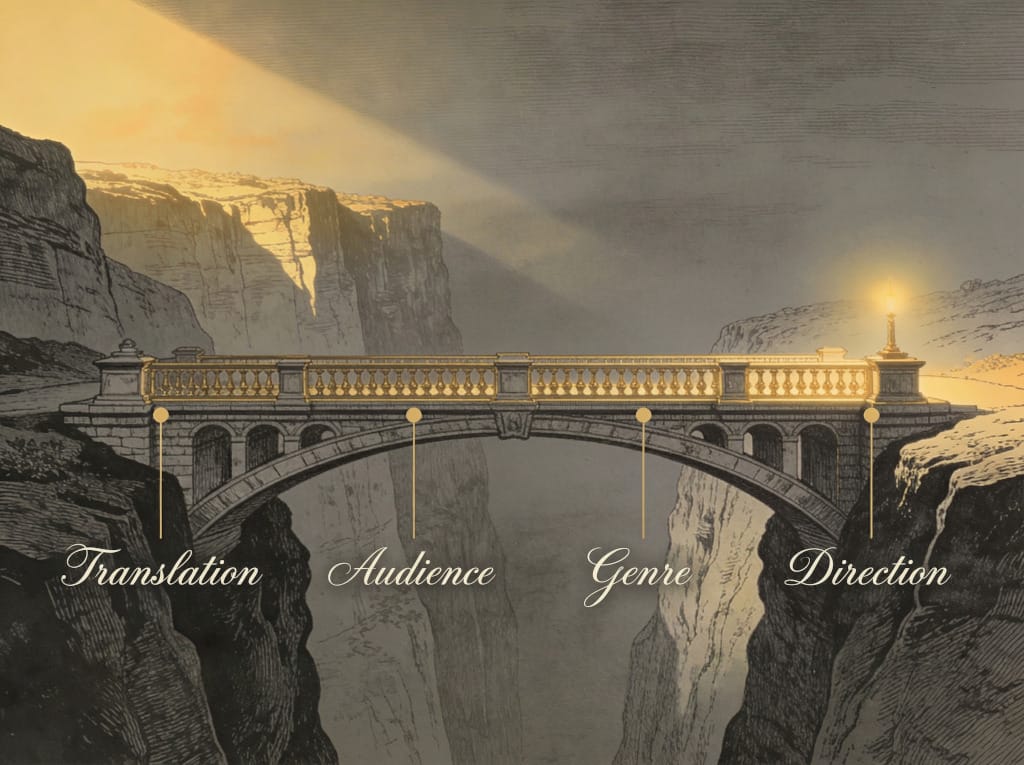
These spiritual classics feel hard because they are hard—but not in the way you think. The difficulty isn't about your intelligence or your faith. It's about four very real gaps between you and the text:
The Translation Gap: These books were written centuries ago in Spanish, Latin, French, and Italian. You're reading a translation of a translation of a mystical concept. Teresa of Avila was trying to describe experiences that barely fit into 16th-century Spanish—and now we're trying to understand them in 21st-century English. It's not surprising these feel opaque.
The Audience Gap: The Interior Castle wasn't written for you. It was written by a cloistered Carmelite nun for her other cloistered nuns. They shared a baseline understanding of monastic life, liturgical cycles, and theological vocabulary that we simply don't have. She assumed her readers knew what "infused contemplation" meant. We don't.
And here's the thing: when you try to apply monastic practices—like severe fasting or hours of silent prayer—to your actual life with kids, deadlines, and laundry, it doesn't work. You end up feeling guilty for not being a 16th-century nun. But the principles Teresa taught—like detachment, trust, interior peace—those can translate to your life. You just need someone to help you separate the eternal truth from the cloistered form.
The Genre Gap: This isn't a modern self-help book with action steps and chapter summaries. It's a spiritual map, a theological journal, a mystical treatise. We're trying to read a blueprint as if it's a novel—and then wondering why it doesn't feel like a beach read.
The Direction Gap: Here's what almost no one tells you: these texts were written to be read under guidance. Saint Teresa expected her sisters to have a spiritual director who could interpret their experience and help them discern what was happening in prayer. We're trying to navigate mystical terrain without a map-reader—and that was never how it was supposed to work. Teresa herself said it plainly: "He who has himself for a guide has a fool for a guide." She knew. This was never meant to be a solo journey.

The Three "Walls" Every Reader Hits
Even when you understand why these books are hard, you'll still hit three very specific walls. Every reader does. These aren't signs of failure—they're landmarks on the path:
The Wall of Abstraction: What is a "mansion"? What is "infused prayer"? What does it mean to "recollect the soul"? When the language is purely abstract—when there's no concrete image, no relatable story—our minds have nothing to hold onto. We read the words, but they slide right past us. We finish a chapter and realize we retained… nothing.
The mystics use specialized language that assumes you already understand the framework. When Saint John of the Cross talks about "darkening the intellect," he doesn't mean "stop thinking"—he means something very specific about how human reason relates to divine mystery. But without that context, the words just… float there. Confusing. Intimidating. Leaving you feeling like you missed something obvious.
The Wall of Aridity: "I'm reading the words, but I feel nothing." We pick up a mystical classic expecting profound emotional experiences—tears, consolation, a sense of God's presence. Instead, we get dryness. Silence. Maybe even boredom. And so we assume: "This isn't working. I'm doing it wrong."
But here's what Teresa and John and Thérèse all taught: that dryness is often exactly where you're supposed to be. It's not a sign you're failing—it's a sign you're being weaned off spiritual "feelings" so you can learn to love God for God, not for how prayer makes you feel. The boredom, the silence—those aren't bugs. They're features. And no one tells you that.
A critical note: If this dryness is accompanied by symptoms like persistent hopelessness, inability to function in daily life, or thoughts of self-harm, please reach out for professional help. Sometimes our struggle is medical, not mystical—and recognizing that isn't a failure of faith, it's wisdom.
The Wall of Self-Diagnosis: We hear the word "mystic" and we picture ecstasies, visions, levitation. We expect fireworks. And when our own prayer life is just… quiet (or noisy, with kids yelling in the background), we think, "This path isn't for people like me. I'm not holy enough for this."
Or worse—we read about Saint John of the Cross's "Dark Night" and wonder if our clinical depression is actually a spiritual gift we should just endure. We compare, we misdiagnose, and we either dismiss ourselves or spiritualize what might need real help. We need someone to help us see the difference—because the mystics themselves were very clear that not every struggle is a mystical purification. Sometimes you just need a therapist. And that's okay.
What's on the Other Side of the Walls?
But here's what Teresa knew, what all the mystics knew: those walls aren't dead ends. They're just the entrance hall.
Imagine, for a moment, the fog lifting. Imagine the abstract words becoming a clear, sunlit path—not because you've mastered them, but because God's grace illuminates what was always there. Imagine the dryness you feel not as failure, but as a normal, predictable season where God is working—a sign that you're exactly where He's placed you.
That clarity? That peace? That feeling of finally understanding?
That's what's waiting for you. And here's what the Church has always taught: this isn't just for nuns in convents or mystics with visions. The Second Vatican Council declared in Lumen Gentium that all the faithful are called to this fullness of life—not just clergy, not just religious. This castle? It's your baptismal inheritance. The path of prayer Teresa describes was never meant to be locked away behind cloister walls.
The path of the saints is accessible to every vocation. Saint Thérèse of Lisieux—a cloistered Carmelite, like Teresa—developed what she called her "Little Way." It was her way of showing how busy, ordinary people could live the same mystical path Teresa described. The small acts. The daily duties. The interruptions and frustrations of regular life. Thérèse showed that all of it—all of it—could become the fuel of contemplation. You don't need a cloister. You need a guide who can show you how Teresa's wisdom applies to your life.
And you don't have to find the way alone.
A Guide Built for the Walls You're Facing
We built our guided explorations to walk beside you through these exact walls. This isn't just an audiobook or a summary. It's a companion who knows the way—because these challenges are part of the journey itself, not obstacles to remove.
Here's how we accompany you:
Through the Wall of Abstraction: We practice what the Church calls mystagogy—the ancient art of unpacking sacred mysteries with care and clarity. Our role isn't to give you techniques to master the mysteries—it's to help you recognize how God is already revealing them to you. We don't just read Teresa's words and move on. We pause. We unpack. We translate the abstract language into concrete images and modern examples. When Teresa talks about "Prayer of Quiet," we'll show you what that actually feels like in your life—not just define it. When she describes "spiritual betrothal," we'll give you a metaphor that connects to your actual experience of relationship and trust.
The goal isn't to eliminate the mystery. It's to give you a way in—so you can finally understand what she's saying instead of just nodding along and hoping it clicks later.
Through the Wall of Aridity: We give you permission not to feel anything—because that's what the saints themselves taught. We'll show you how Teresa, John of the Cross, and Thérèse saw "dryness" not as failure, but as what Saint John called the "Night of Sense"—a critical, even good, part of the journey. It's a sign of progress, not evidence that God is absent.
We'll help you recognize when the silence is holy—and when it might be something else that needs attention. We'll teach you how the saints themselves navigated these seasons, so you can stop second-guessing yourself and simply be present.
Through the Wall of Self-Diagnosis: We help you distinguish authentic Catholic contemplation from both "wellness spirituality" and impossible standards. Following the Vatican's guidance in Orationis Formas, we'll show you what Teresa actually taught: that the real goal of prayer is a simple, steady, loving relationship with God—right where you are, kids and chaos and all.
No ecstasies required. No comparing yourself to visions you'll never have. We'll help you see what's actually happening in your prayer life instead of what you think should be happening. We act as the external guide who can gently challenge your blind spots—the ones you can't see on your own—and help you recognize the ways God is already meeting you.
Just you, and God, and the gentle work of love.
This is what spiritual direction has always done. Not remove the walls—they're part of the path. But walk through them with you, so you're never alone in the mystery.
Ready to Start Your Journey (Without the Fear)?
You don't need a theology degree to respond to the profound peace God is offering you. You just need a guide to help you recognize His invitation and how to say yes.
We've created a complete, 100% free guided audio exploration of The Interior Castle. It's the perfect first step—a clear map and a warm companion to walk with you, one room at a time.
Written by

The Interior Castle
Experience St. Teresa's masterwork with guided audio narration, visual aids, and reflection prompts designed for busy Catholics.
Start the Full Exploration